ARCHITECTURAL BRIEFING 001
ARCHITECTURAL BRIEFING 001
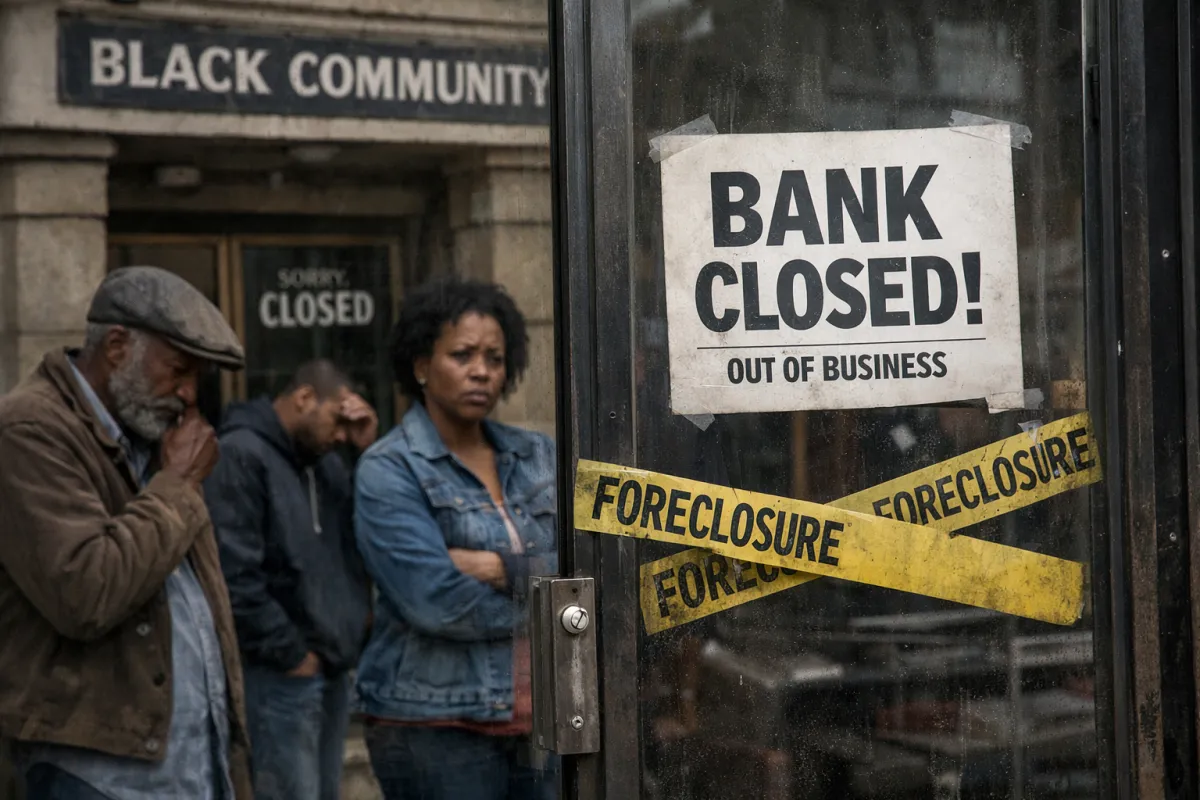
Why Black Banks Fail And What No One Is Willing to Admit
Black banks do not fail because Black people lack financial discipline.
They fail because they are asked to operate as moral symbols instead of financial institutions.
This distinction matters more than sentiment is willing to admit.
Historically, Black-owned banks are undercapitalized at birth. They are expected to serve communities that have been structurally stripped of surplus while simultaneously being held to higher performance expectations than their mainstream counterparts. This creates an impossible starting position.
In other ecosystems, banks are born with excess. Excess capital, excess patience, excess institutional backing. Losses are anticipated. Learning curves are financed. Failure is treated as tuition.
Black banks are rarely afforded this margin.
Instead, they are burdened with community expectations. They are asked to be fair, forgiving, inclusive, and symbolic, all while operating within a regulatory and competitive environment that rewards ruthlessness, scale, and reserve strength.
A bank cannot survive on righteousness alone.
Another inconvenient truth: governance often fails before capital does.
Boards are frequently constructed around representation rather than competence. Emotional alignment replaces institutional experience. Decision-making becomes cautious where it should be precise and reactive, and where it should be anticipatory.
Banks do not collapse because people are malicious.
They collapse because incentives are misaligned.
Depositors want access. Communities want relief. Regulators want compliance. But without a governing philosophy that prioritizes institutional durability over short-term appeasement, the balance sheet eventually absorbs the contradiction.
This leads to the final truth few are willing to articulate:
Black banks are often forced to behave like social programs in a system that only rewards financial discipline.
When institutions are required to solve generational harm without generational capital, failure becomes predictable, not tragic, but structural.
Keystone Black Capital studies these failures without sentimentality.
Not to assign blame.
But to define conditions.
Because institutions do not survive on intention.
They survive on design.
And until Black-owned financial institutions are designed with the same capital buffers, governance rigor, and long-horizon patience as their counterparts, their outcomes will remain unfairly predictable.
Understanding this is not pessimism.
It is the beginning of seriousness.
Receive new research the day it publishes. Subscribe →
