ORIGIN STORY
The Architect of
Infrastructure
Eli Fields is the mastermind behind Keystone Black Capital. Driven by a mission to build the architecture of capital in Black America, he is shifting the trajectory of how the next generation of institutions get built—ensuring they don't just survive, but operate with scaled precision.
THE ORIGIN
Building The
Trajectory
Eli Fields was born and raised in Newark, New Jersey. Academics were a struggle, and staying out of trouble was harder. By his own account, he wasn't on any kind of trajectory until football showed up in high school.
The turning point arrived through a man named Coach Jay at Barringer High School, who pulled him aside with a simple mandate: "This sport is going to change your life." From that moment, Eli lived as if it would.
The kid who couldn't focus in a classroom completely rebuilt himself around a singular goal. He flipped his GPA from a 0.9 to a 3.3, racking up accolades on the field, with his eyes locked on Division I football and the NFL beyond it.

THE TRANSFER PORTAL PIONEER
Choosing The
Culture

THE BOLD PIVOT
Leaving the Division I Playbook
When coaching changes shifted the landscape at Florida Atlantic University, the easy decision would have been to stay comfortable within an invisible, perfectly resourced infrastructure. Instead, Eli calculated a different trajectory.
Entering the transfer portal in its inaugural cycle was a move into uncharted territory—before a blueprint for transferring up even existed. It required risking the safety of Division I prominence for something that demanded absolute intent and a new environment to grow.
THE CONSCIOUS DESTINATION
The Magnetic Pull of Southern
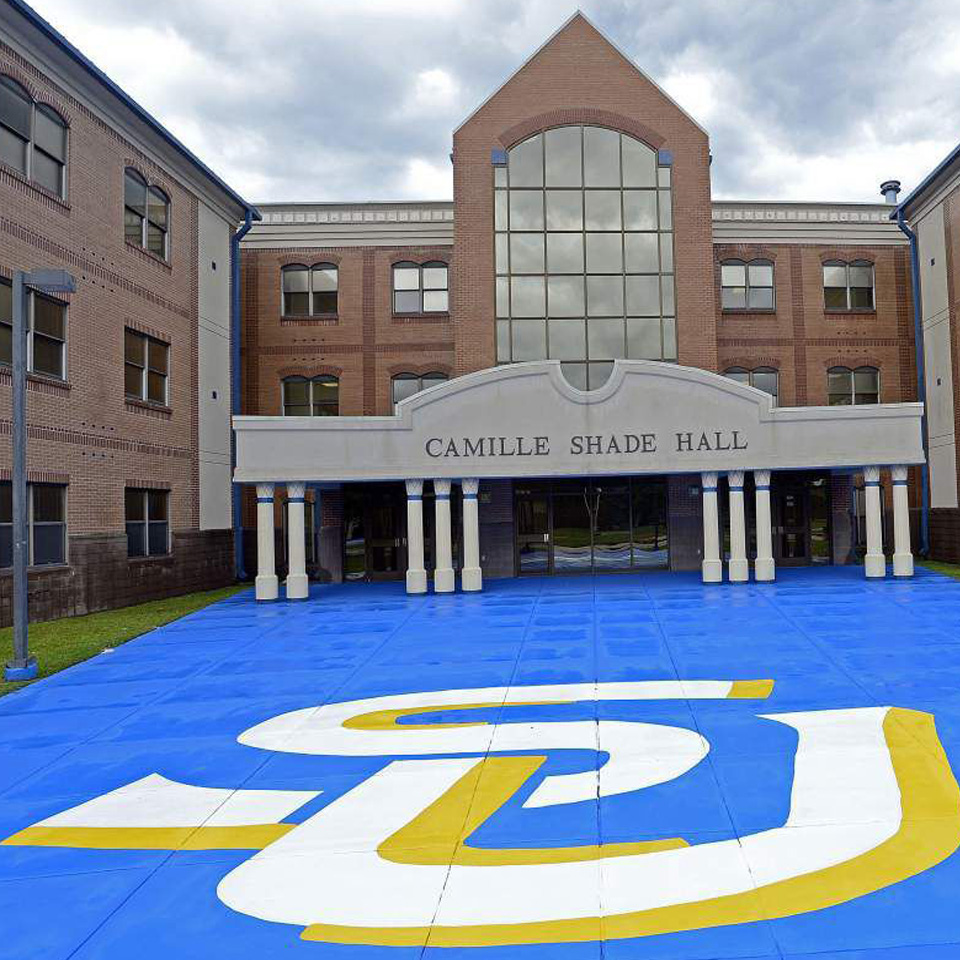
Choosing Southern University wasn't a compromise; it was a search for a profound cultural architecture. It was a conscious shift to an HBCU environment driven by the raw, undeniable gravity of 'Black, by Black, for Black.'
This wasn't merely a change in jerseys. It was an immersion into a community where the people genuinely had his best interests at heart. Playing in the SWAC Championship against Deion Sanders' rising program was a pinnacle moment, but the true revelation was happening off the field—an analytical awakening driven by the institution itself.
The bigger thing wasn’t the score.
It was what he saw on campus.
THE PATTERN
9 Dumbbells.
The total equipment in a Division I weight room shared by every sport on campus. The catalyst for an institutional revelation.
The Tolerance for
Broken Systems
At Florida Atlantic University, the infrastructure had been so complete it was invisible—you didn’t notice it because nothing was missing. At Southern, the gaps were the first thing you noticed. And once you started noticing them, you couldn't stop.
The hardest part wasn't that the institution was under-resourced. It was that the under-resourcing had been there for thirty years, and nobody was treating it as the central problem. The cultural pull of being in a Black institutional environment was beautiful, but it was also the only thing driving the existence. Not prestige. Not operational excellence. Not innovation. Just a tolerance for the same broken systems three decades running because nobody had built the muscle to fix them.
The pattern wasn't about a weight room. It was about every Black institution he could now see clearly—the comfort with surviving, and the tolerance for problems that nobody addressed because the underlying architecture of capital had never been built.
THE ECOSYSTEM
The Keystone
Thesis
Closing the thirty-year gap by replacing the tolerance for broken systems with permanent, institutional architecture.
01
Infrastructure
We will no longer accept the nine-dumbbell standard. This pillar rebuilds the operational foundation of Black institutions, ensuring survival is no longer the baseline—excellence is.
02
Scale
Moving beyond isolated survival. By integrating an AI-driven operating system across the ecosystem, we amplify the reach, efficiency, and compounding power of Black banking.
03
Sovereignty
True independence requires ownership. We construct capital frameworks that are fully owned, operated, and sustained from within—breaking the cycle of external reliance forever.
THE NEXT CHAPTER
Build the
Muscle
The bigger purpose isn't the league. It's the ecosystem itself. From NFL hopeful to financial architect, Eli Fields built Keystone to scale and shift the trajectory of how the next generation of Black institutions get built.
Architecting Sovereignty • Three Core Pillars